

Moving to Gainesville, Florida from Out of State: What Surprises Most People
When I moved to Gainesville, I brought 13 winter coats.
I want you to understand that this was not irrational. I had relocated from a cooler southern state where coats are a real wardrobe category. You need one for casual days, one for work, one for evenings out, one for something formal. Different colors, different lengths, different fabrics. Thirteen coats is actually a reasonable number if you live somewhere with winter.
My now-husband, a lifelong Floridian, watched me unpack them with an expression I can only describe as patient confusion. I explained the logic. He said "whatever."
I did not wear a single one that first winter.
That story is, in miniature, what most out-of-state moves to Gainesville look like. You arrive with a mental model built from somewhere else, and Gainesville quietly, consistently, and sometimes hilariously dismantles it. Not in a bad way. But the adjustments are real, and the people who make the smoothest transition are usually the ones who knew what was coming.
So here's what nobody really warns you about.
The weather is not what you're picturing
Most people moving to Florida imagine warmth and sunshine, and that part is accurate. What they underestimate is the humidity. Gainesville sits in north central Florida, not on the coast, which means you don't get the ocean breeze that softens things in places like Jacksonville or Tampa. Summer here is warm, wet, and genuinely humid in a way that surprises people who thought they knew what humid meant.
It rains almost every afternoon from late spring through early fall. Not all day. Usually a hard storm that rolls in around 3pm, makes itself known for about forty minutes, and then moves on. You learn to time things around it. You also learn to keep an umbrella in the car permanently, not occasionally.
Forget whatever you thought you knew about hair. Humidity at that level has opinions about hair, and it will share them with you daily. Sandals become a year-round footwear choice not because it's trendy but because it's practical. And if you move here from a place with four real seasons, you will probably wear a jacket exactly once all winter, feel slightly overdressed, and quietly wonder what you were thinking when you packed for the move.
The upside of all of this is that you can garden twelve months a year. The produce here reflects that. There's a farmers market, popup, or food truck rally somewhere in Gainesville practically every day of the week, some large and well-established, some perfectly small and neighborhood-specific. The quality of what's grown locally and sold fresh is one of those things people discover here and never stop appreciating.
A few things nobody puts in the relocation brochure
From roughly February through August, your car will be yellow. This is pollen. Gainesville has a remarkable tree canopy, which is genuinely one of the things that makes this city beautiful, and those trees produce pollen in quantities that will make you question everything you thought you knew about allergy season. Stock up on allergy medication before you arrive. You will need it.
Twice a year, lovebugs swarm. If you haven't encountered lovebugs before, they are exactly what they sound like: small insects that fly in mated pairs and appear in such numbers during peak season that driving through them is unavoidable. They're harmless, but they are everywhere, and they do damage to car paint if left on too long. You will become a regular at the car wash in a way you never anticipated.
Then there are palmetto bugs. Florida palmetto bugs are, technically, a species of cockroach. A large species. A large, flying species. They are not a sign of an unclean home. They seek shelter indoors when heavy rain arrives, regardless of how spotless your house is. This is simply Florida. Every long-term Florida resident has a palmetto bug story. You will get yours.
Nobody warns you about the alligators. Not because Floridians are trying to hide something, but because after a while they genuinely forget that alligators are not a normal part of daily life everywhere else. They are in ponds, retention areas, drainage gutters, crossing roads, and occasionally in places that will stop you completely the first time you see one. The rule is simple and it works: leave them alone and they will almost certainly leave you alone. After a few months here you will drive past one sunning itself on a bank and not even slow down. That moment is when you know you've arrived.
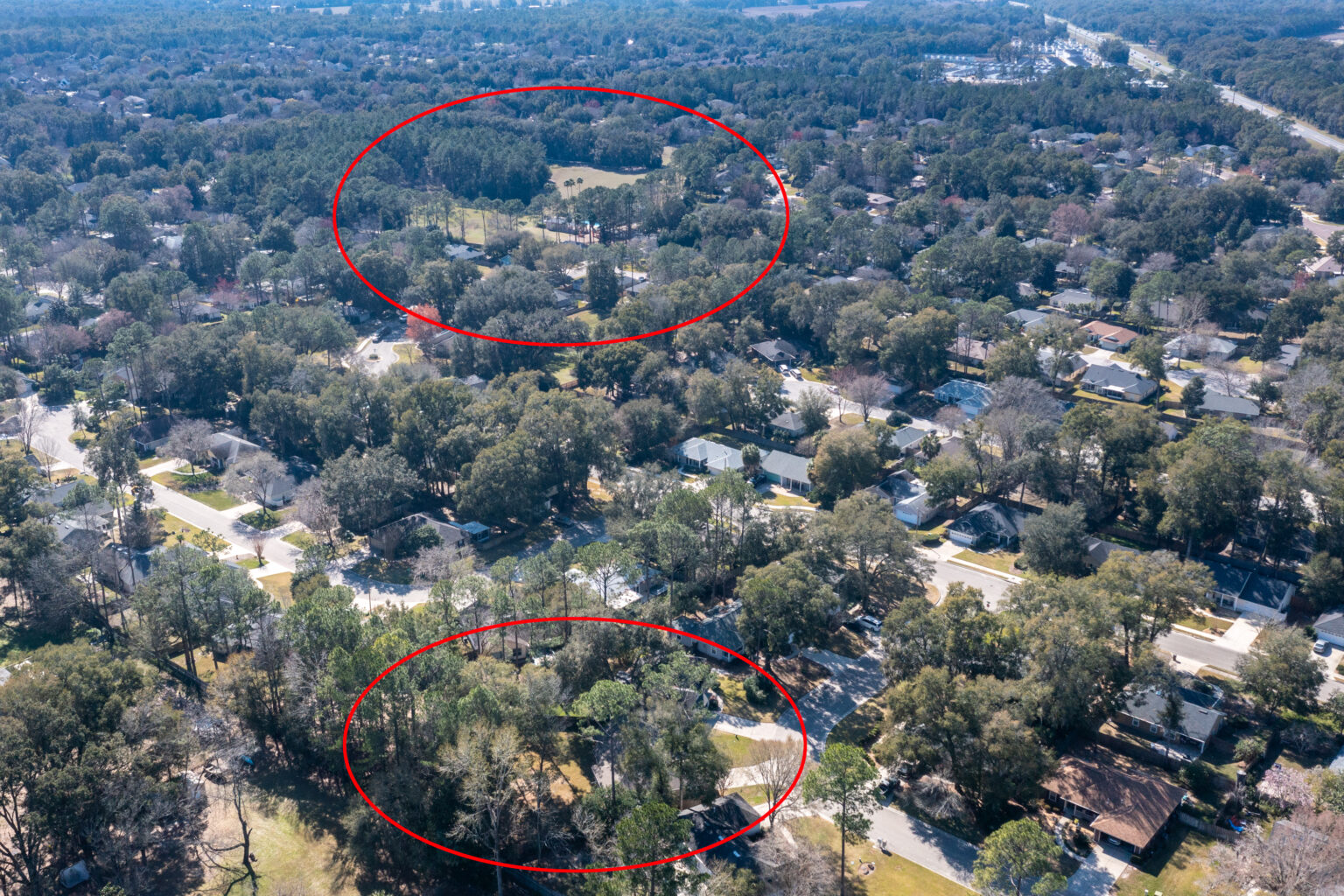
The deer will surprise you in a different way. Because Gainesville has so much preserved natural land woven through and around the city, the deer population has plenty of room to live and roam, and roam they do, right through established neighborhoods on a perfectly ordinary Tuesday morning. You'll look up from your coffee and there will be three of them in the yard. It stops feeling remarkable faster than you'd expect. That's just Gainesville.
I say all of this not to alarm you but because these are exactly the things I wish someone had just told me plainly before I arrived. None of them are dealbreakers. They're just Florida, and knowing about them in advance makes them considerably less startling when they show up.
The University of Florida is not in the background. It's in everything.
People who research Gainesville know it's a college town. What they typically don't grasp until they're living here is the scale of the university's footprint on daily life. The University of Florida is not a campus you drive past. It's one of the largest universities in the country, and our largest employer, and it shapes the culture, the traffic, the economy, and the rhythm of this city in ways that are hard to fully appreciate from the outside.
Game days are their own category of experience. Ben Hill Griffin Stadium holds nearly 90,000 people. Those people come from outside. When the Gators play at home, the city feels it. Traffic patterns change. Certain roads become genuinely difficult. The energy in the city shifts in a way that is either electric and exciting or something you'd prefer to be far from, depending entirely on who you are. Either reaction is valid. But knowing it happens, and planning around it if needed, matters.
Beyond football, the university calendar shapes the rental market, the pace of neighborhoods close to campus, and the flow of new people moving in and out of the city. If you live near UF, you'll feel the rhythm of the school year. If you live in the northwest or toward Newberry, you probably won't notice it much at all.
The surprises that land on the other side
Not all of the surprises are adjustments. Some of them are genuinely delightful.
People moving from Miami, Tampa, or Orlando are frequently caught off guard by how affordable Gainesville is by comparison. As of spring 2026, the median sale price for a single-family home in Gainesville was $368,000, well below the state median of $420,000 and a significant distance from Miami's $650,000. That gap is real, and it changes what your budget can do here.
The quality of healthcare surprises almost everyone. UF Health Shands is a nationally ranked academic medical center. The Malcolm Randall VA Medical Center serves veterans from across the region. For people relocating from smaller markets or from places where specialist access was a challenge, discovering that world-class healthcare is essentially in your backyard is a significant quality of life change.
And then there's the landscape itself. People who picture Florida as flat strip malls and miles of concrete parking lots have not been to Gainesville. The tree canopy here is dense and rolling. There are stretches of road, even ones I've driven hundreds of times, where the live oaks arch completely over the street and something about it still makes me catch my breath a little. After 25 years. The springs nearby... Ginnie Springs, Ichetucknee, the underwater cave systems that draw divers from around the world... are unlike anything most people have seen. And Payne's Prairie, 6,000 acres of preserve just south of town with wild bison and horses roaming it, is not something you expect to find twenty minutes from a Publix.
The outdoor life here is genuinely rich in a way that takes most newcomers by surprise. And once you find it, it becomes one of the main reasons people who move here tend to stay.
The pace either grows on you quickly or takes some time. There's not much in between.
Gainesville is not Tampa. It's not Orlando. It doesn't have the same scale of entertainment, nightlife, or commercial density as larger Florida metros, and if that's what you're comparing it to, it will feel smaller than you expected.
What it has instead is a pace that most people, once they settle in, find genuinely livable. Traffic is manageable. The drive across town is a real drive, not an exercise in frustration. There's a steadiness to daily life here that people who came from high-intensity metros often describe as the thing they didn't know they needed until they had it.
The adjustment period is real either way. Give yourself a few months before you decide how you feel about it. Most people who struggled with the quiet in the first couple of months look back later and recognize that was only the adjustment, not the verdict.
The more you know going in, the smoother it goes
Every out-of-state move carries a gap between what you researched and what you actually experience when you arrive. Gainesville is no different. The gap just has specific, Gainesville-flavored contents.
Understanding the neighborhoods before you commit to one makes an enormous difference. If you haven't read it yet, How to Choose the Right Area When Moving to Gainesville, Florida walks through how different parts of the city actually feel to live in, which is a different question than which part looks best on a map.
And if you're still in the research stage and want an honest conversation about what to expect, I'm always happy to talk through it. No agenda. Just someone who has lived here a long time, learned most of these lessons firsthand, and genuinely enjoys helping people make a move they'll be glad they made.
The coats, by the way, eventually found a home. I kept two.
Questions people ask before moving to Gainesville from out of state
What surprises most people after moving to Gainesville?
The most consistent surprises fall into two categories. First, the things nobody warned them about: the humidity, the afternoon summer rain pattern, the pollen season, lovebugs, and the reality of palmetto bugs. Second, the pleasant discoveries: how affordable the housing is compared to other Florida markets, how strong the healthcare system is, and how much natural beauty exists within a short drive of the city.
Is it possible to buy a home in Gainesville without visiting first?
It's possible, and some out-of-state buyers do it successfully, but it carries real risk. The gap between what a home looks like online and how it feels in person is significant, and that gap is wider when you're also unfamiliar with how different areas of the city function day to day. Video walkthroughs and a trusted local agent help considerably, but there's no full substitute for spending time in the neighborhoods you're considering before you commit.
What documents and preparations should I handle before moving to Gainesville from out of state?
On the real estate side, getting pre-approved for a mortgage before you begin your search is the single most important preparation. It gives you a real number to work with and puts you in a position to act when the right home comes available. Beyond that, researching Florida-specific considerations like homeowners insurance requirements, property taxes, and the homestead exemption process will save you surprises after closing. Florida homeowners insurance in particular is worth researching early. Rates vary significantly based on home age, roof condition, and construction type, and they can be meaningfully different from what you've paid elsewhere.
How is the Gainesville real estate market different from larger Florida cities?
Gainesville moves at a more measured pace than Miami, Tampa, or Orlando, with less speculative activity and more stability tied to its institutional employers. Well-priced and well-prepared homes in desirable areas still move quickly. The market rewards preparation and realistic pricing rather than the kind of frenetic activity that characterized larger metros in recent years.
